Why eating alone changes how your body processes food
Eating alone doesn't just feel different — it changes your pace, your satiety signals, and how your body prepares to digest. Here's the physiology behind it.
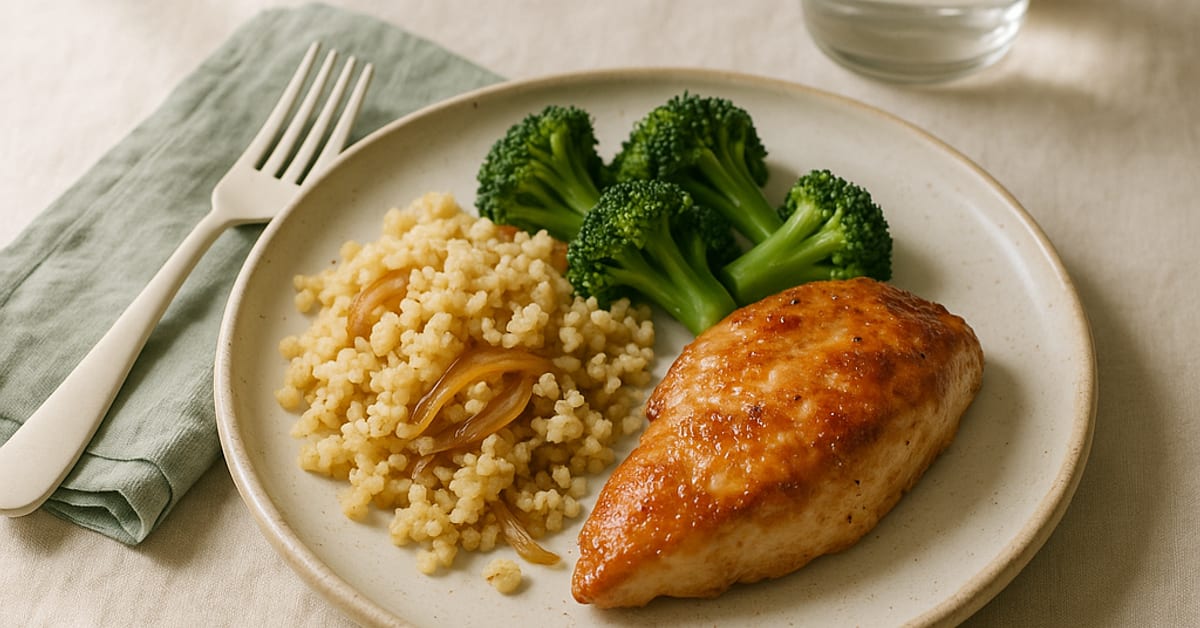
There's a moment most people recognise. You eat lunch at your desk, half-watching something on your phone, and twenty minutes later you're not sure you actually tasted any of it. You're full, technically, but it doesn't feel like a meal. It feels like a refuelling stop.
That gap between eating and feeling fed isn't just psychological. The context around a meal — who's there, how much attention you're paying, whether the pace is yours alone or shared with others — actually shapes what your digestive system does before the first bite even happens. This is worth understanding, because it's one of those mechanisms that's hiding in plain sight.
The brain starts digesting before you do
Digestion doesn't begin in the stomach. It begins in the brain, through something called the cephalic phase response. When you see food, smell it, anticipate it, or even just hear someone describe a dish you like, your nervous system starts preparing the digestive tract. Saliva increases. Gastric acid begins to release. Digestive enzymes start mobilising. Insulin edges upward in anticipation of incoming glucose.
This preparatory phase matters more than most people realise. Research suggests that the cephalic phase can account for somewhere between 20 and 50 percent of the insulin response to a meal, and it significantly affects how efficiently the stomach processes what arrives. It's the body's way of saying: something's coming, get ready.
The trigger for this response is attention and anticipation. Which is where eating context starts to change things.
Why communal meals naturally slow you down
When you eat with other people, the meal has a built-in pacing mechanism. You talk, you listen, you put your fork down. You notice what's on the table before you start eating. Someone passes you something. The meal has a social shape to it, and that shape tends to stretch the eating window in ways that are actually useful for satiety signalling.
It typically takes around 15 to 20 minutes for satiety hormones like leptin and GLP-1 to begin registering fullness in the brain. Eating slowly enough to land inside that window gives those signals a chance to arrive before you've overeaten. A shared meal at a table, with conversation and the natural pauses that come with it, tends to hit that window more reliably than lunch at a keyboard.
There's also evidence that the cephalic phase response is more robustly activated in social eating contexts. The anticipatory attention that comes with sitting down together — the looking at dishes, the smelling of a shared meal, the visual engagement before eating — tends to be richer and longer than the glance-and-fork moment of eating solo from a container.
What distraction does to satiety
Eating alone isn't the problem in itself. Eating alone while distracted is a different story.
When attention is divided — split between a screen, a task, or something worrying — the cephalic phase response is blunted. The anticipatory priming is weaker. And then there's a second effect: distraction impairs meal memory. Studies on attentive eating have found that people who eat while distracted feel hungrier later in the day, even when they've consumed the same amount of food. The brain's record of having eaten is hazier, and satiety signalling is less reliable as a result.
This isn't a willpower story. It's a neuroscience one. The brain was wired to connect eating with full sensory presence — sight, smell, taste, social cues — and when that presence is fragmented, the downstream signals get fragmented too.
A practical illustration: eating a bowl of lentil soup slowly, at a table, while talking to someone, gives your digestive system a meaningfully different experience than eating the same bowl in four minutes while scrolling. The lentils are the same. The fibre load, the protein, the micronutrients — identical. But the pace, the preparatory signalling, and the satiety registration can all shift based on context.
The evolutionary logic behind this
For most of human history, eating was communal by default. Meals were prepared together, shared around a fire or a table, and eaten in the presence of other people. The brain's anticipatory wiring for food — the cephalic phase machinery, the attentiveness to what's coming — evolved in that context.
Solo eating, and particularly distracted solo eating, is a recent and fairly anomalous way to consume food. The body doesn't have a special mode for it. It uses the same system, but without the contextual inputs that system was built to expect.
This doesn't mean eating alone is harmful or that every shared meal is automatically nourishing. It means the context of eating is a meaningful variable — one that affects digestion, satiety, and probably your relationship with food over time — and it's almost entirely absent from how most nutrition conversations are framed.
What you can actually do with this
You don't need to restructure your social life around meals. But there are small, concrete things that seem to preserve more of the cephalic phase benefit even when eating solo.
Pause before eating. Not for a long time — thirty seconds to a minute of actually looking at what's in front of you, noticing the smell, registering that you're about to eat. This sounds almost absurdly simple, but it directly activates the anticipatory response that distracted eating skips over.
Remove the primary screen. This is the one with the highest apparent impact on meal memory and satiety registration. Eating while listening to something is different from eating while watching something — passive audio tends to require less of the attentional bandwidth that digestion benefits from.
Eat at a table, even alone. The physical context of a meal — a plate, a table, a chair — signals something different to the brain than eating from a bag, a container, or while standing. It sounds like a small thing. Physiologically, it probably isn't.
If you do eat with others, let yourself be slow. Let the conversation extend the meal. You don't have to finish first.
A different way to think about the meal
Most food thinking focuses on what's on the plate — the macros, the ingredients, the caloric density. Those things matter. But the meal is a larger object than the food inside it. It includes pace, attention, anticipation, and context. And those variables affect what your body actually does with what you eat.
The next time you notice that a meal didn't quite land — that you finished it but don't feel fed — it's worth asking not just what you ate, but how. Whether the cephalic phase got a proper chance to run. Whether the eating window was long enough for satiety signals to catch up.
Food is information, and your nervous system is always reading the context it arrives in. Giving it something worth reading isn't complicated. It mostly just requires showing up to the meal.