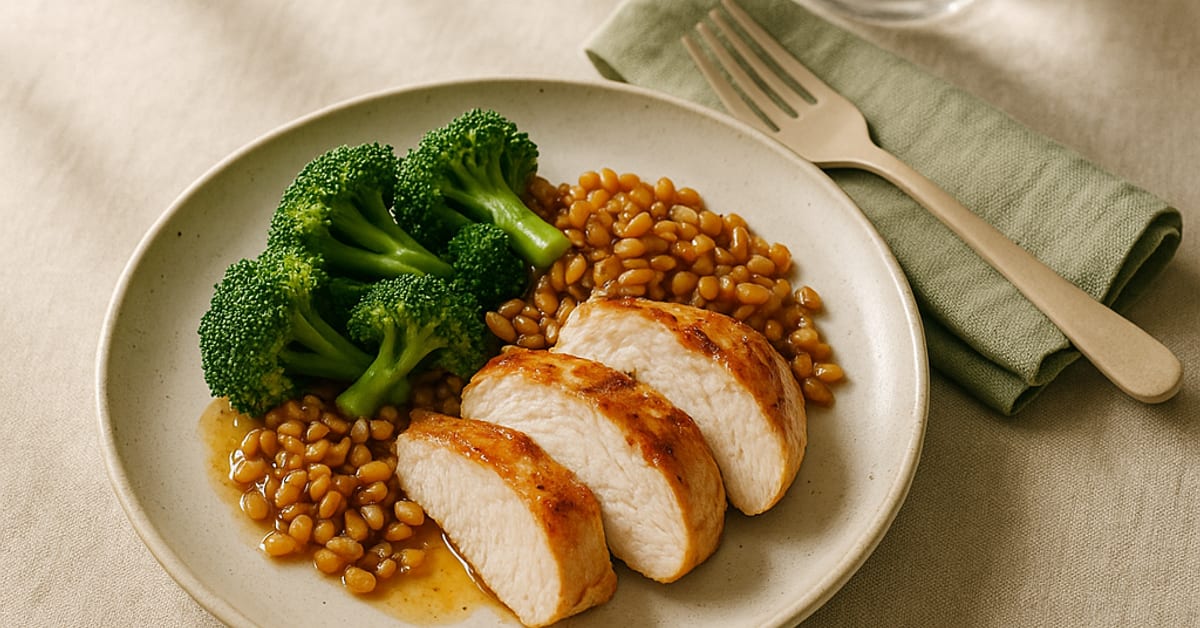
Why meal timing affects how well you digest food
Your digestive system anticipates meals before they arrive. Here's how consistent meal timing works with your body's internal clock to improve digestion.

Most people think digestion starts when food hits the stomach. It doesn't. It starts earlier — sometimes minutes earlier — when the body anticipates that a meal is coming. And whether that anticipation is sharp or sluggish depends a lot on one underappreciated variable: when you usually eat.
This isn't a productivity hack or a diet rule. It's biology. Your digestive system runs on its own branch of the circadian clock, and it uses the pattern of your past meals to prepare for your next one.
Your gut has its own sense of time
The circadian rhythm is usually described as a sleep-wake cycle, but it governs far more than that. Nearly every cell in the body tracks time, and the cells lining your digestive tract are no exception. The stomach, small intestine, pancreas, and liver all follow circadian patterns — ramping up certain processes at some hours, scaling them back at others.
What makes this relevant to meal timing is that the digestive system doesn't just react to food passively. It pre-loads. Before you've taken a single bite, the body can begin releasing stomach acid, priming enzyme secretion, and preparing bile for fat digestion. This anticipatory phase — sometimes called the cephalic phase response — is partly triggered by sensory cues like smell and sight, but it's also driven by learned timing. If you've eaten lunch at noon for months, your gut has quietly noted the pattern and starts preparing around 11:45.
Eat at noon every day and the system shows up ready. Eat at 2pm some days and 6pm on others, and the preparation is less coordinated — the enzymes arrive late, the acid response is blunted, and digestion begins at a mechanical disadvantage before the food has even been fully chewed.
What the cephalic phase actually does
The cephalic phase response is worth understanding in more detail, because it's doing several things at once.
When it's working well, stomach acid secretion begins rising before the meal, creating an environment that can break down proteins more effectively and act as a first barrier against pathogens. Pancreatic enzymes — including amylase for carbohydrates, lipase for fats, and proteases for proteins — are queued up and ready to activate in the small intestine. The gallbladder is primed to release bile, which is essential for emulsifying dietary fat and making fat-soluble vitamins like A, D, E, and K accessible for absorption.
All of this happens upstream of the food. It's infrastructure that the body builds in anticipation, and it only gets built reliably when there's a consistent signal to build it from.
When meals are irregular, this preparation either doesn't happen or arrives out of sync with the food. The result isn't dramatic — you won't feel it as acute discomfort in most cases — but the efficiency of digestion is reduced. Nutrients that could have been absorbed are passed along the gut and processed by bacteria instead, which can contribute to bloating and discomfort, particularly with foods like beans, cruciferous vegetables, and high-fiber grains that are already more demanding to break down.
Irregular timing and the confused digestive system
It helps to think of irregular meal timing less as skipping a rule and more as giving the body contradictory information.
The digestive system uses previous meal timing as a signal to coordinate what are actually quite complex, multi-organ processes. The stomach, small intestine, pancreas, and liver don't operate in isolation — they're meant to work in sequence, with each handoff timed carefully. When the first meal of the day arrives at 7am one morning and 11am the next, these organs have no reliable pattern to synchronize against. They default to a reactive mode rather than a prepared one.
This is also why many people report that eating feels heavier or more effortful after a period of irregular eating — on holiday, during a stressful work stretch, or after a run of late nights. The body isn't broken; it's just been deprived of the timing signal it uses to prepare.
Consistency isn't the same as rigidity
It's worth being clear about what meal timing consistency actually requires, because this can easily tip into anxiety-inducing rules about eating windows and strict schedules.
The research on circadian digestion generally points to rough consistency — eating within a similar two-to-three hour window each day — rather than precision to the minute. The body is looking for a reliable pattern, not a timetable. If lunch tends to happen somewhere between noon and 1:30pm most days, that's likely enough to sustain a meaningful anticipatory response.
The practical implication isn't that you should never eat late or shift a meal around. It's that if you're regularly eating at very different times from day to day, it's worth asking whether some of the digestive sluggishness or heaviness you experience might be a coordination problem rather than a food problem. Before attributing discomfort after a high-fiber meal entirely to the fiber, it's worth considering whether the system was ready for the meal at all.
Timing as something the body knows how to use
There's a useful reframe buried in all of this: timing is a nutrient in the functional sense of the word. Not in the literal nutritional definition, but in the sense that it's a resource the body actively uses to do something useful. Just as adequate stomach acid is necessary for protein digestion, and bile is necessary for fat absorption, a prepared digestive system is necessary for efficient nutrient extraction — and consistent timing is one of the inputs that makes preparation possible.
This is different from saying you should eat on a rigid schedule. It's saying that the body has already built sophisticated machinery for handling food, and part of that machinery runs on predictability. You can either work with that or around it.
Foods with more complex digestive demands — lentils, cruciferous vegetables, whole grains, high-fat meals — may benefit particularly from arriving when the system is prepared. Not because those foods are problematic, but because they require more coordinated enzymatic activity to break down fully, and coordination depends on timing signals being consistent.
A practical place to start
If you've never paid much attention to when you eat, a useful first step is simply noticing. Not tracking religiously, not committing to a schedule — just observing. Over a few days, notice what time your first meal tends to happen, when hunger actually shows up, and how those two things relate. Notice whether meals at similar times tend to feel different from meals that arrive at irregular ones.
That kind of attention is where most useful behavior change starts — not with a new rule, but with a clearer picture of what's actually happening. Timing, it turns out, is one of those variables that was always present. Most people just haven't been paying attention to it.